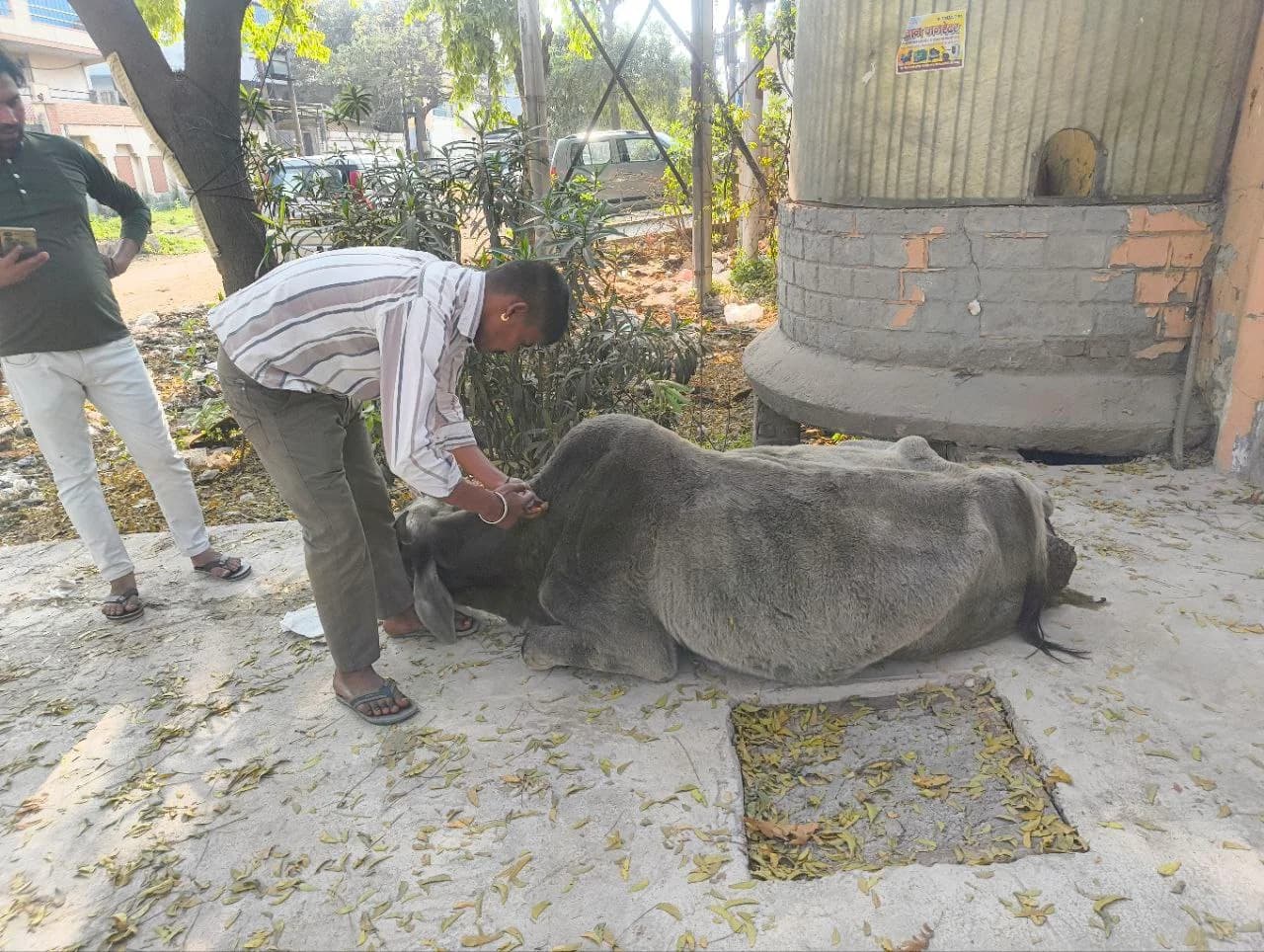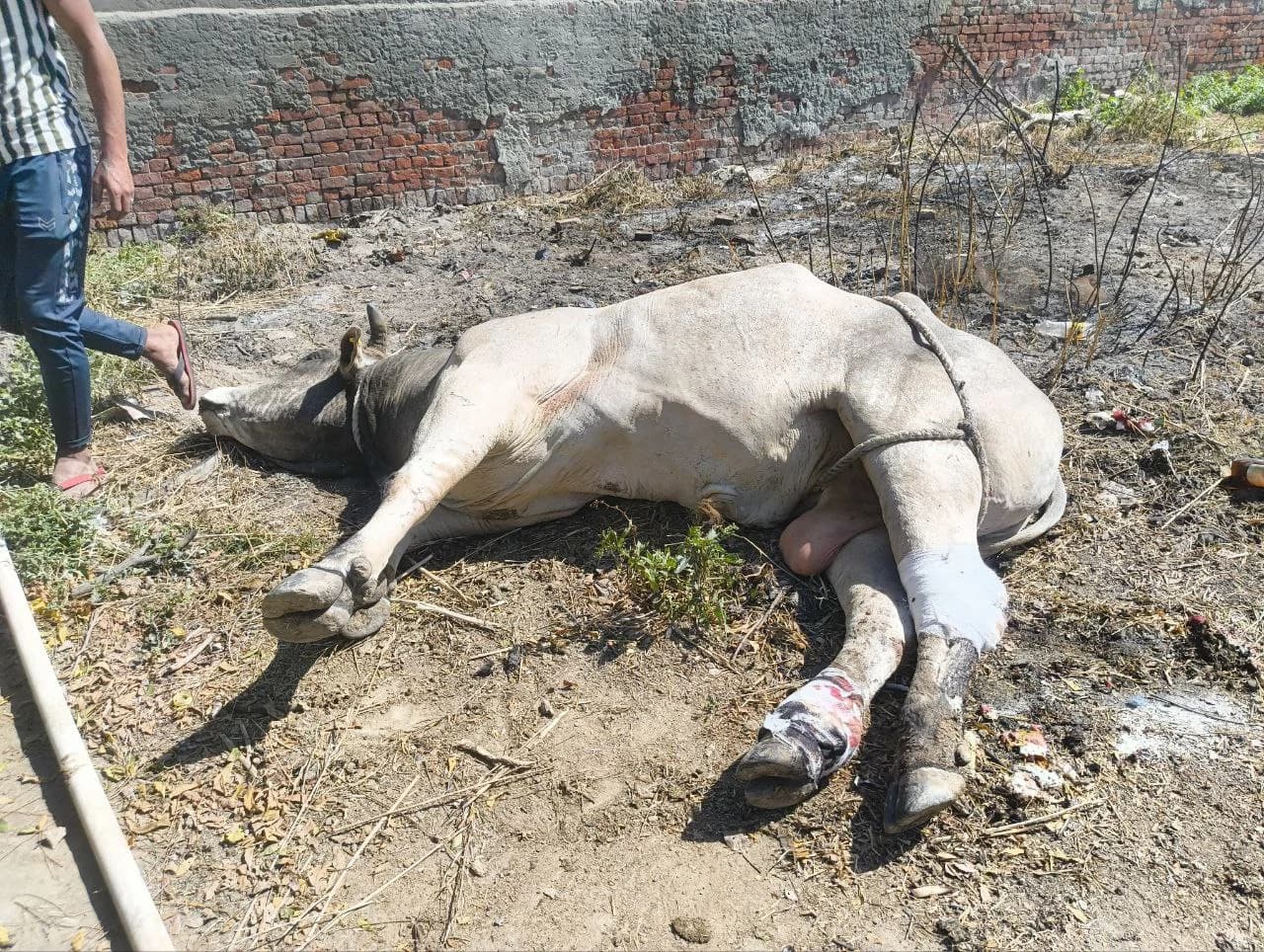
A young bull lies severely injured on the edge of a road, after a speeding vehicle crushed him mercilessly. His body shivers uncontrollably; dust mixes with blood as each breath drags pain deeper into his chest. Nearby, villagers gather helplessly, too afraid to touch him lest they worsen his injuries. The road where he grazed peacefully just hours ago has become a battlefield where he fights alone, losing strength with every passing minute.
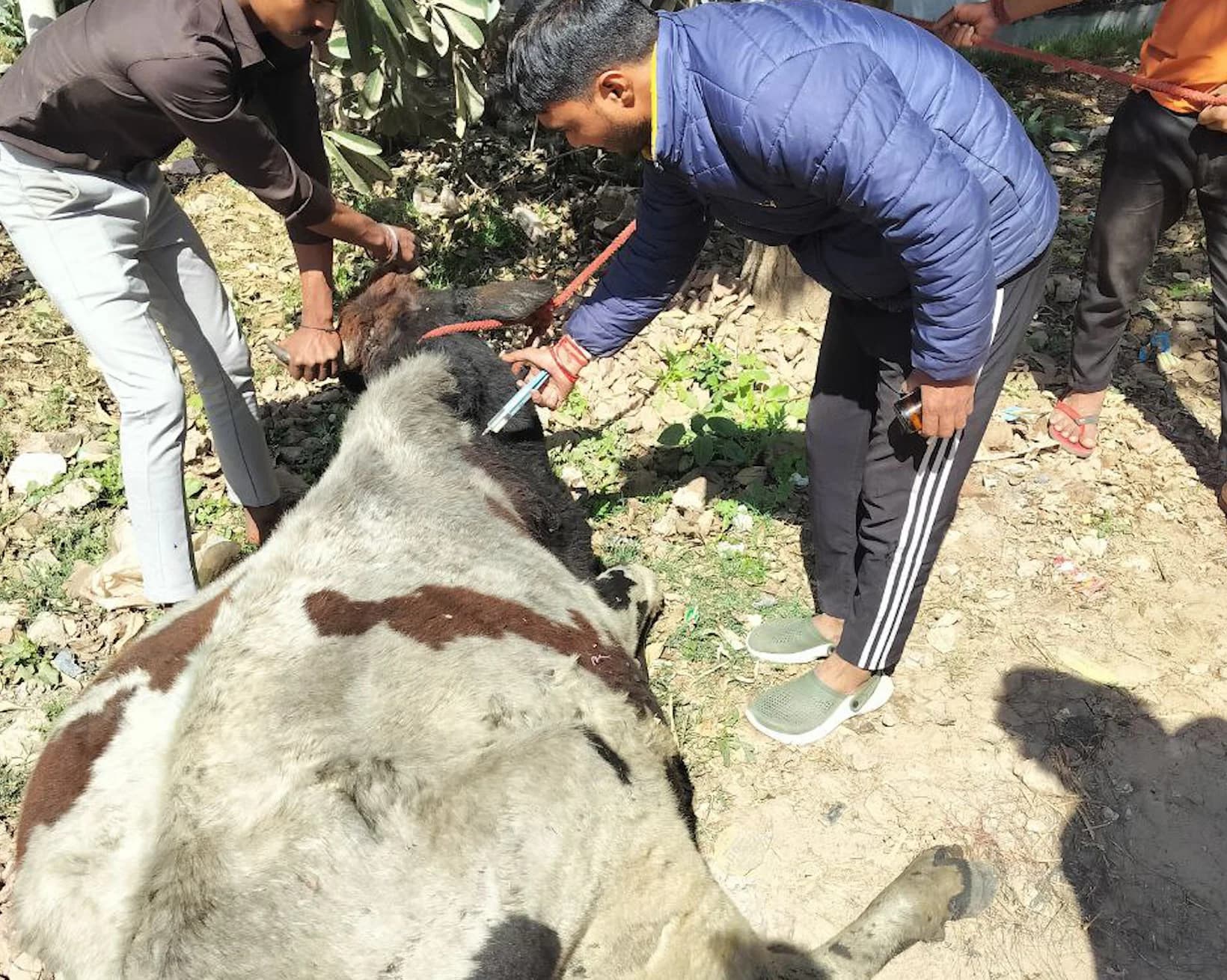
Even in the ambulance, treatment never stops — painkillers, bandages and IV drips keep hope alive.
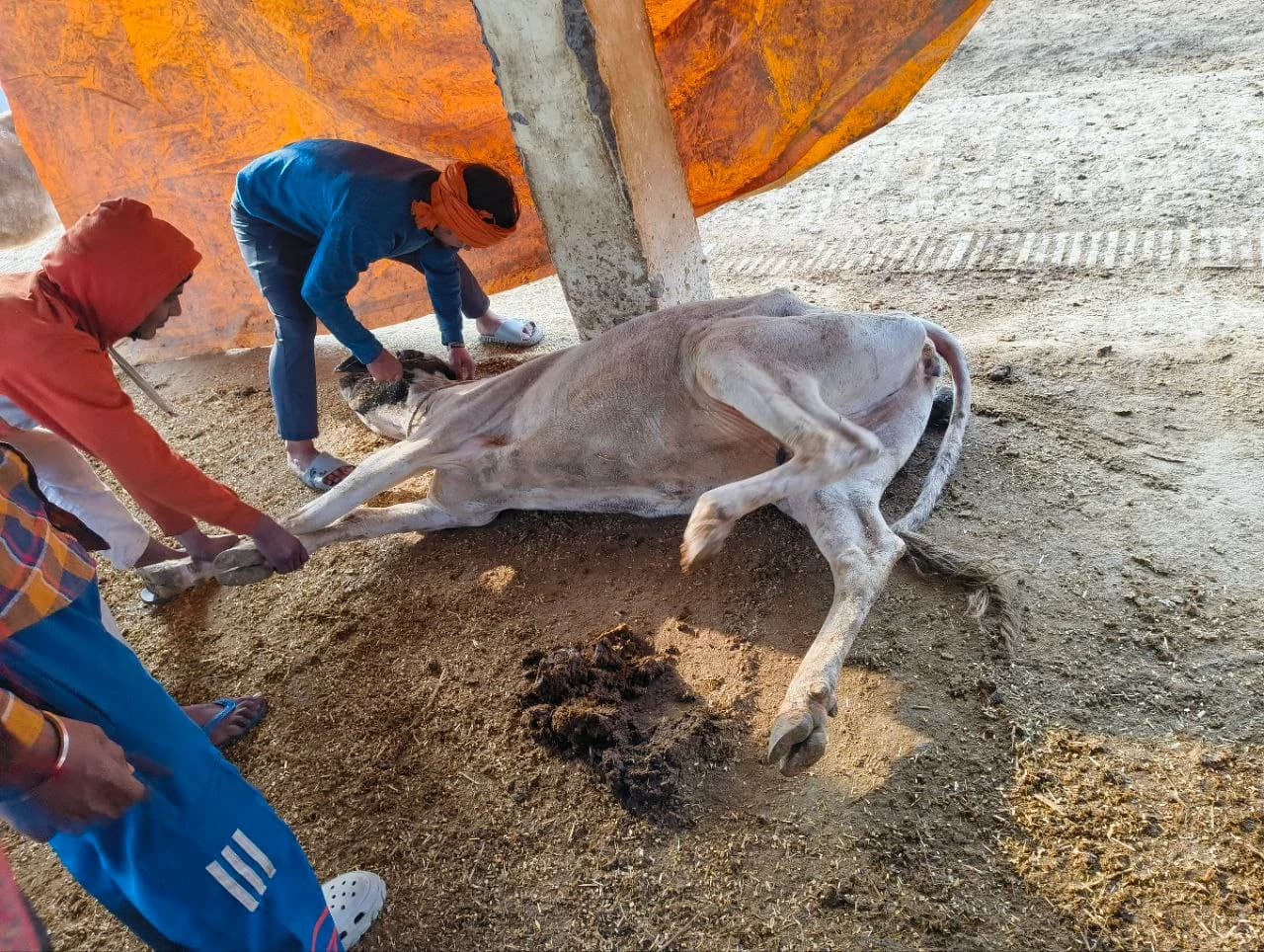
Responding to these kinds of emergencies, the trained Gausevaks of Jan Swabhiman Welfare Society rush in with medical kits, ropes and other necessary equipment and transport vehicles, if the need arises. Assessing injuries, they check the injured jeev for fractures, internal bleeding, and spinal damage. With teamwork, they slide a stretcher beneath his body, lifting him gently but firmly. Even in the ambulance, the treatment never stops — painkillers, bandages, IV drips are given to tide the injured bull through the pain. Even at the hospital or the Gaushala, with veterinarians around, the Gausevaks don't leave his side, whispering soothing words and stroking him gently to calm him down and reassure him.
“His survival becomes a testament to human courage and compassion — one of the many goals of Janswabhiman.”
Recovery may take days or even weeks. When he finally rises, the joy of the Gausevaks knows no bounds as they witness him trying to stand on his legs, however wobbly, and show to them that he has regained his strength. His survival becomes a testament to human courage and compassion — one of the many goals of Janswabhiman Welfare Society.